


Pipe Lining Services That Avoid Major Digging
- thetrenchlessguys
- 1 day ago
- 5 min read
A sewer line can fail beneath a driveway, landscaped yard, finished basement, or busy commercial parking area. In those locations, traditional replacement can create a second problem: extensive excavation to reach the first one. Pipe lining services offer a practical alternative when the existing pipe is structurally suitable for rehabilitation. Instead of digging up the entire line, a new pipe is formed inside the damaged one.
For homeowners, that can mean protecting a yard, patio, or driveway. For facility managers and property owners, it can mean limiting tenant disruption, maintaining access, and reducing the downtime associated with open-trench work. The right method depends on the condition of the line, its material, access points, and the nature of the damage. A proper camera inspection comes first.
What Pipe Lining Services Actually Do
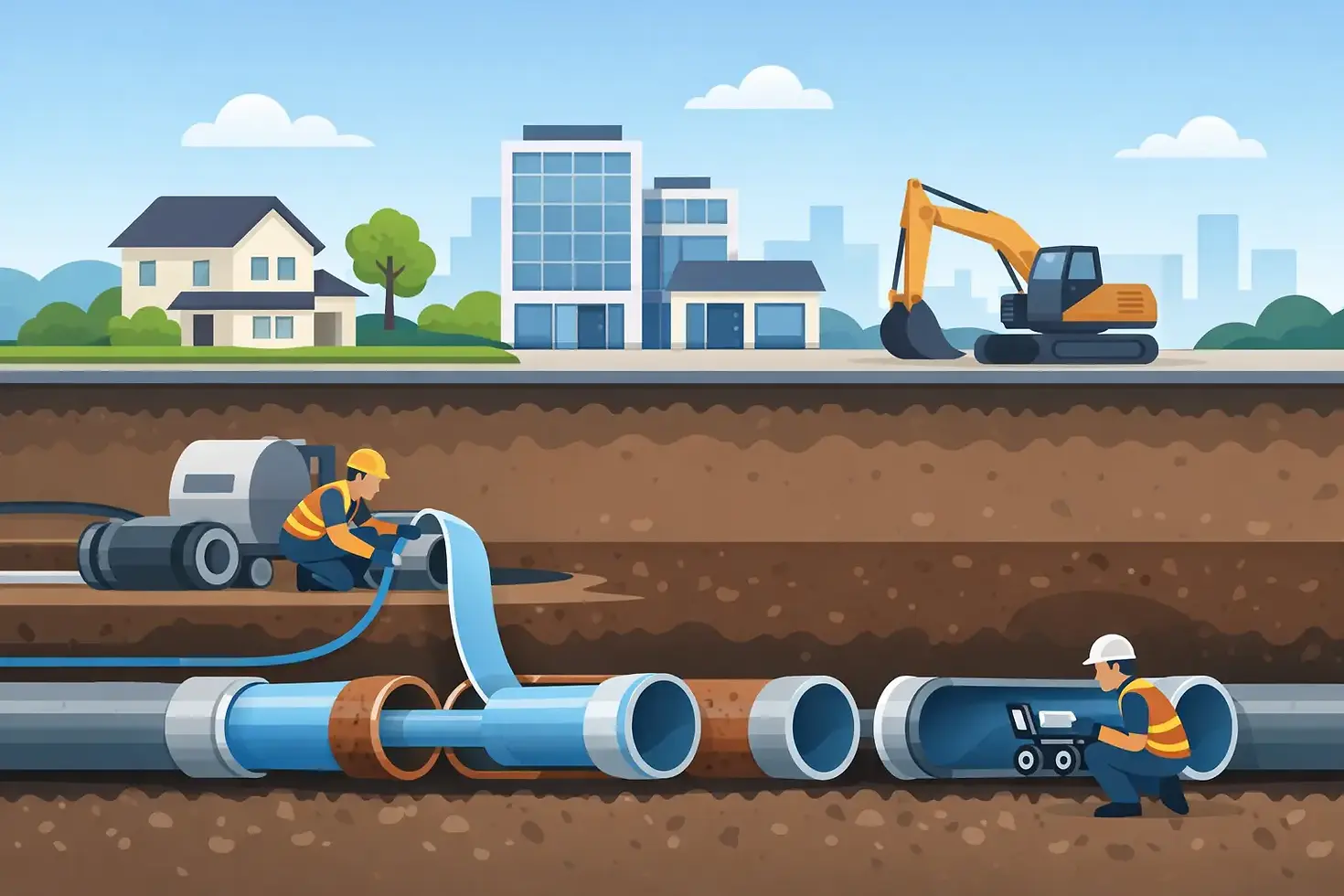
Pipe lining, often called cured-in-place pipe lining or CIPP, rehabilitates an existing sewer or drain pipe from the inside. A flexible liner saturated with a specialized resin is inserted into the cleaned pipe. It is positioned through an existing access point, inflated or held in place, and cured to create a durable, jointless pipe within the original host pipe.
The finished liner seals cracks, offset joints, small gaps, and areas affected by root intrusion. It also creates a smooth interior surface that can improve flow through an aging line. Because the liner follows the path of the existing pipe, crews can often complete repairs with limited digging rather than trenching across the property.
This is not a coating sprayed casually into a pipe. Effective CIPP work requires accurate measurements, thorough cleaning, appropriate resin selection, controlled curing, and final inspection. The quality of the preparation matters as much as the installation itself.
When Pipe Lining Is a Strong Repair Option
Pipe lining is often a good fit for sewer laterals and drain lines with recurring root intrusion, cracks, leaking joints, corrosion, or deterioration caused by age. Clay, cast iron, PVC, and other common pipe materials may be candidates, provided the pipe still has enough shape and continuity to accept a liner.
A homeowner may notice slow drains, backups, sewer odors, wet spots in the yard, or repeated root removal. Commercial properties may see recurring service calls, bathroom closures, drain backups during peak hours, or unexplained water use. Those symptoms do not automatically mean lining is the answer, but they warrant a clear diagnosis.
CCTV sewer inspection provides that starting point. A camera shows where the trouble is located, how far it extends, whether roots have entered through joints, and whether the pipe has collapsed, bellied, or shifted. It also helps distinguish a localized issue from deterioration throughout the line.
Lining is particularly valuable when the pipe runs beneath concrete, mature landscaping, roadways, building floors, or other difficult-to-excavate areas. Avoiding excavation can reduce restoration work, but cost savings are not guaranteed in every case. A short, easily accessible pipe section may be more economical to excavate and replace. The best recommendation should follow the pipe conditions, not a one-size-fits-all sales approach.
Conditions That May Require Another Method
A liner needs a usable host pipe. If a line is severely collapsed, missing large sections, has a major belly, or cannot be cleaned and opened properly, pipe bursting or excavation may be the better solution. Pipe bursting replaces the old pipe by pulling a new line through its path while breaking apart the existing pipe.
Heavy scale buildup, hardened deposits, and extensive roots must also be removed before lining. Sewer jetting and mechanical cleaning are often part of the preparation process. If a contractor proposes lining without inspecting and cleaning the line first, that should raise questions about the expected result.
The Pipe Lining Process From Inspection to Final Camera
A reliable trenchless repair begins with locating and inspection. Technicians identify access points, trace the line path where needed, and run a CCTV camera through the pipe. This confirms the length, diameter, material, and defects that need to be addressed.
Next, the pipe is cleaned. High-pressure water jetting can remove grease, roots, debris, and buildup that would interfere with the liner. For older cast-iron systems, additional descaling may be needed to create a clear passage. The crew then reinspects the pipe to verify that it is ready for rehabilitation.
The liner is measured and prepared for the specific repair. It is inserted through a cleanout, manhole, or other available access point and positioned across the damaged area. Once expanded against the pipe wall, the resin is cured using the method suited to the project. After curing, the liner becomes a new structural interior pipe.
A final camera inspection verifies the work. The technician checks that the liner is continuous, properly seated, and free of obstructions. If the line includes branch connections, those openings may be reinstated with specialized cutting equipment or addressed through lateral launch systems, depending on the system design.
Benefits That Matter to Akron Property Owners
The most visible benefit is reduced digging. A trenchless repair can preserve portions of a lawn, walkway, driveway, landscaping, or parking lot that would otherwise need to be removed and restored. This is especially meaningful in Northeast Ohio, where seasonal weather and site conditions can complicate exterior excavation.
Reduced disruption also matters inside commercial buildings. When a sewer line serves restrooms, kitchens, apartment units, or production areas, a repair plan should account for access, safety, scheduling, and operational continuity. Lining may help keep a project more contained, though some temporary service interruptions can still be necessary while cleaning, installation, and curing are completed.
Long-term performance is another consideration. The cured liner forms a continuous, corrosion-resistant barrier inside the old pipe, reducing paths for root intrusion and groundwater infiltration. It does not fix every drainage issue, however. If poor slope, undersized piping, or recurring grease discharge is causing trouble, those factors should be addressed as part of the overall plan.
Choosing a Contractor for Pipe Lining Services
Trenchless work is specialized work. The contractor should have the equipment and experience to inspect, clean, prepare, line, and verify the pipe rather than treating lining as an add-on service. Ask how the line will be evaluated, how roots or scale will be removed, what curing method will be used, and how the completed repair will be documented.
It is also reasonable to ask whether lining is the best option for your specific conditions. A dependable contractor will explain when pipe bursting, spot repair, cleaning, or conventional excavation makes more sense. The goal is not simply to avoid digging at all costs. It is to select a repair that solves the actual problem and holds up over time.
For properties with multiple lines or ongoing maintenance concerns, keep the inspection footage and repair records. That information can help plan future work, support property management decisions, and reduce uncertainty if symptoms return elsewhere in the system.
A Better First Step Than Guessing
Sewer problems are easy to ignore until a backup, odor, or damaged surface makes them urgent. A camera inspection gives you a view below the ground before you commit to a repair method. It can show whether pipe lining is a cost-effective way to restore the line with minimal disruption or whether another trenchless solution is the smarter route.
The Trenchless Guys Akron evaluates sewer and drain conditions with advanced inspection and rehabilitation equipment, then recommends the repair approach that fits the pipe, property, and access conditions. A clear diagnosis now can protect the areas above your sewer line and help prevent a small defect from becoming a much larger project later.


Comments