


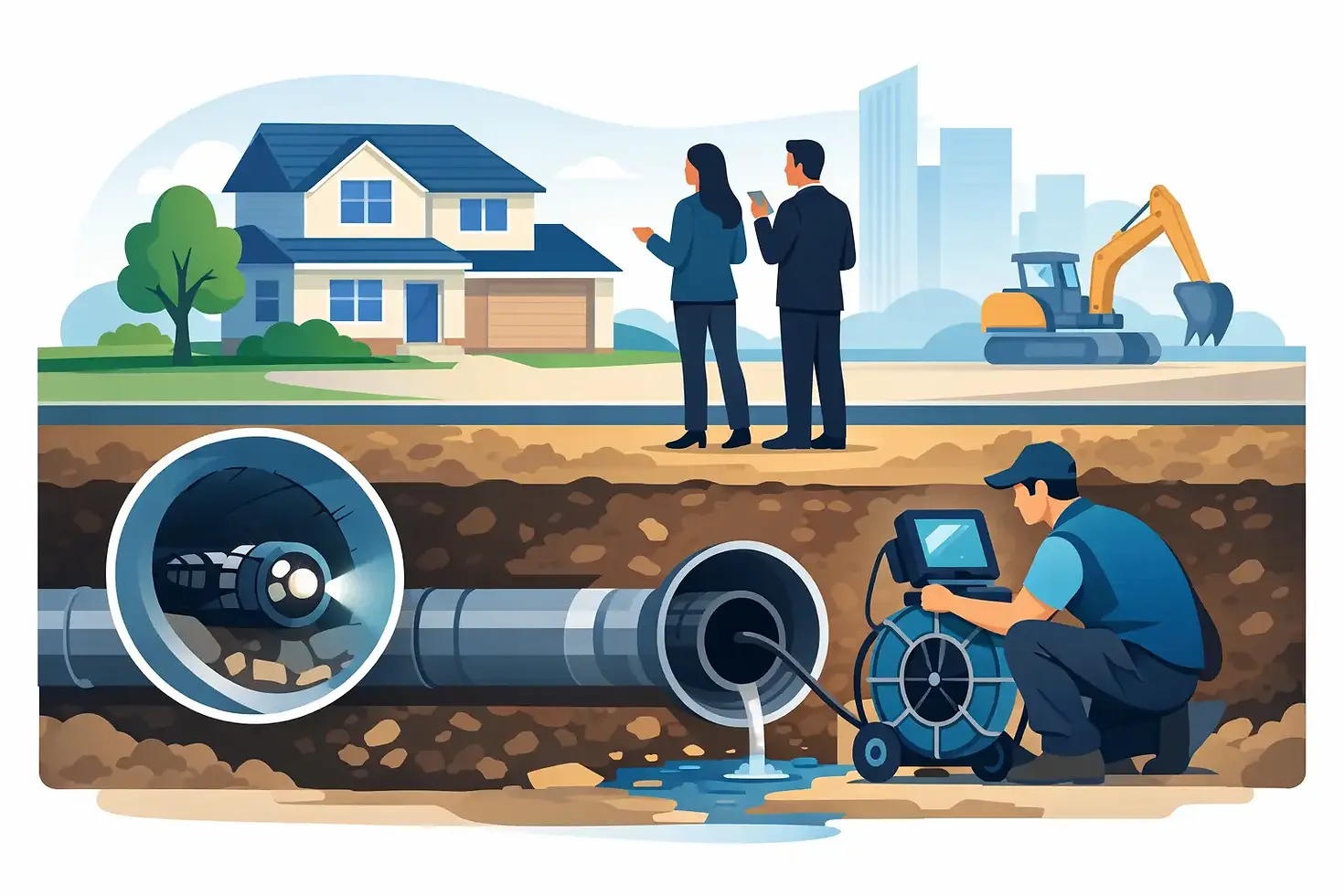
Sewer Inspection Before Property Purchase
- thetrenchlessguys
- Jul 20
- 6 min read
A home can look move-in ready while the sewer line beneath the yard is nearing failure. A sewer inspection before property purchase gives buyers a clear view of a system that is not covered by a standard home walkthrough and may receive only limited attention during a general inspection. For Akron-area buyers, that matters. Older housing stock, mature trees, clay tile pipe, shifting soils, and long service laterals can all create expensive problems below grade.
A camera inspection is a relatively small step before closing, but it can prevent a major surprise after you receive the keys. More importantly, it gives you facts: the pipe material, its condition, the location of defects, and whether a repair can be handled with a minimally invasive trenchless method.
Why Sewer Inspection Before Property Purchase Matters
The sewer lateral is the privately owned pipe that carries wastewater from the building to the public sewer connection. In many communities, the property owner is responsible for this line, including repairs beneath lawns, driveways, sidewalks, patios, and parking areas. If the line collapses or repeatedly backs up, the cost is not simply a plumbing bill. It can involve excavation, surface restoration, cleanup, and disruption to the property.
A typical home inspection may identify slow drains, evidence of a past backup, or an older plumbing system. It does not necessarily include a full CCTV camera inspection of the buried sewer line. The line can appear to work normally during a brief inspection even when roots, cracks, offsets, or deteriorated joints are already restricting flow.
This is especially relevant for homes built with clay, cast iron, Orangeburg, or aging concrete pipe. Clay pipe can separate at joints and allow root intrusion. Cast iron can corrode internally until the opening becomes significantly reduced. Orangeburg, a fiber-based pipe material used in some mid-century properties, can deform, blister, or collapse over time. A camera shows what is actually happening rather than relying on the age of the home or a seller's recollection.
What a Sewer Camera Inspection Can Reveal
A professional CCTV inspection involves feeding a specialized camera through an accessible cleanout or other entry point. The live video allows the technician to evaluate the pipe from the building toward the municipal connection or the accessible end of the line. A locator can identify the camera's position and depth, helping pinpoint concerns without unnecessary digging.
The inspection may reveal a line that is in good operating condition. That is useful information for a buyer. It may also identify conditions that need monitoring, cleaning, repair, or replacement.
Common findings include:
Root intrusion at pipe joints or cracks
Cracked, broken, or collapsed pipe sections
Offset joints caused by soil movement or poor installation
Standing water that may indicate a belly or poor slope
Heavy scale buildup inside cast iron pipe
Grease, wipes, debris, or other blockages
Pipe material transitions and aging connections
Previous repairs that are incomplete or deteriorating
Not every issue requires immediate replacement. Light root intrusion may be managed with sewer jetting and a maintenance plan if the pipe is structurally sound. A localized crack may be a candidate for trenchless spot repair or coating. A severely collapsed line, widespread joint separation, or deformed Orangeburg pipe may call for rehabilitation or replacement. The right recommendation depends on the condition of the pipe, its depth, access points, and the extent of damage.
When to Schedule the Inspection
The best time is during the property inspection contingency period, before contingencies are removed and before closing. Schedule it early enough to review the findings, request estimates if needed, and discuss the issue with your real estate agent and seller.
Do not wait for a backup, a heavy rain event, or the first week after moving in. Sewer lines can be deceptive. A partial blockage may still pass water when a home is vacant or lightly used. Once multiple bathrooms, laundry, a dishwasher, and daily household activity are added, a restricted line can become a messy and urgent problem.
Buyers should also confirm that there is an accessible cleanout. If no cleanout is available, an inspection may require access through another suitable point, and the scope can be more limited. A qualified sewer contractor can explain the available access and what portion of the line can be evaluated.
What to Ask for in the Report
A useful inspection is more than a verbal statement that the line is “clear.” Ask for recorded footage or documented findings, along with the pipe material, approximate length inspected, and locations of significant defects. If a concern is found, the report should distinguish between a maintenance issue and a structural failure.
For example, roots at a single joint may be different from roots entering through multiple separated joints along the length of the pipe. A small amount of standing water may be tolerable in some situations, while a deep belly that repeatedly collects solids can lead to recurring backups. Context matters.
Ask whether the issue affects the private lateral, the building drain, or a public sewer component. The answer can affect responsibility, repair options, and the next conversation with the local utility. If the home uses a septic system rather than a municipal sewer, request a dedicated septic inspection instead. A sewer camera may still be useful for the building drain, but it does not replace a full septic evaluation.
How Findings Can Affect the Purchase
A sewer problem does not automatically mean you should walk away from a property. It means you should understand the risk and price it appropriately. If the inspection identifies a repair need, buyers may request that the seller complete the work, provide a closing credit, reduce the sale price, or place funds in escrow for a documented repair.
The best option depends on timing and control. Seller-completed work can resolve the issue before closing, but buyers should verify the scope and workmanship. A credit gives the buyer control over the contractor and repair method after closing, but it also requires enough budget to handle the work promptly. For a commercial property, the decision may also involve tenant schedules, access restrictions, pavement restoration, and operational downtime.
Obtain a written repair recommendation based on the camera findings. Broad estimates without video confirmation can lead to over-scoping or under-scoping a project. A precise diagnosis helps all parties negotiate from the same information.
Trenchless Repair May Protect the Property
Many buyers hear “sewer replacement” and picture a trench cut across the lawn, driveway, or landscaped yard. Traditional excavation is still necessary in some cases, particularly where pipe access, severe collapse, utility conflicts, or grade corrections require it. But it is not the only option.
Trenchless pipe lining can rehabilitate many structurally compromised pipes from within. A resin-saturated liner is installed inside the existing pipe and cured to create a new, jointless pipe within the old one. This can be an effective option for cracks, leaking joints, root intrusion pathways, and certain deteriorated pipe materials. Pipe bursting may be used when a line needs replacement and conditions allow a new pipe to be pulled through the existing route.
These methods can reduce digging, preserve more of the property surface, and shorten disruption. They are not automatically the lowest-cost choice for every line. A short, shallow pipe segment in open soil may be straightforward to excavate. Conversely, a damaged line beneath a driveway, historic landscaping, finished basement, or commercial parking area may be an excellent trenchless candidate.
The Trenchless Guys Akron evaluates camera findings alongside pipe depth, material, damage pattern, and site conditions to recommend a practical repair path. The goal is not to prescribe one method for every property. It is to solve the actual pipe problem with the least unnecessary disruption.
Red Flags Worth Taking Seriously
Some camera findings deserve immediate attention during a purchase decision. A collapsed pipe, major separation, active sewage leakage, or a line that cannot be fully inspected creates a higher level of uncertainty. So does a sewer line with repeated heavy root intrusion combined with aging clay pipe or severe cast iron deterioration.
A line that is full of debris at the time of inspection may need cleaning and a second camera pass before its structural condition can be confirmed. That extra step is worthwhile. You should not make a major buying decision based only on a blocked view of the pipe.
Also pay attention to the property layout. A sewer repair becomes more complex when the line runs beneath a garage, an addition, a retaining wall, a mature tree, or a busy commercial access drive. The condition of the pipe matters, but access and restoration costs matter too.
A Practical Step Before You Commit
Buying property always involves some unknowns. The sewer line should not be one of the largest. A professional camera inspection turns an invisible part of the property into a documented condition you can evaluate before money changes hands.
If the line is sound, you gain confidence. If it needs attention, you have time to understand the repair, account for the cost, and choose the right path before a hidden underground issue becomes your first major ownership emergency.


Comments